Pluto goes direct tomorrow; who are you now as opposed to back in april when it first entered retrograde? what unhealthy attachments, patterns, and subconscious fears have you released since then? this has been a deeply intense year for all of us as a collective, we’re rising again from our old selves. 2017 is a 1 year in numerology; we are all starting over from scratch again, we’ve purged what we’ve needed to and now we must carry on in the new mold of who we’ve made ourselves to be from this point on
do not let yourself be boxed in, for you are unconstrained: neither one thing nor the other. walk the border spaces: where the wood meets the field, where the earth meets the sky, where the dead meet the living. draw your shining riches from the wilds, from the land, from the earth itself, and hold your head high–for whether or not you wear a crown, you are crowned by your own merits.
Below is a list of helpful terms to know when working with gems and minerals. It includes terminology on various crystal shapes and forms. Terms specific to mineral shapes have “(form)” next to them for ease of reference.
Abundance (form): An abundance crystal consists of one long quartz crystal with many small crystals clustered around its base. Its function is to attract wealth and abundance.
Acid: A chemical that contains a reactive form of the hydrogen atom. This readily attacks other chemicals.
Adamantine Luster: A particularly brilliant shine as shown by a specimen such as a diamond.
Amorphous (form): Amorphous crystals, such as obsidian, have no particular shape. Energy flows rapidly through and amorphous crystal as it has no rigid internal organization.
Asteroid: A chunk of rock smaller than a planet that orbits the sun.
Atom: The basic unit of an element.
Aura: The subtle bio-magnetic sheath that surrounds the physical body, providing a protective zone that extends for about 18 inches to 3 feet from the body and contains information about a person’s physical, mental, emotional, and spiritual state of being.
Aura Crystal: A crystal specimen, usually of the quartz variety, that has been coated with metal (i.e. gold, titanium) in vacuum chamber resulting in an iridescent sheen.
Ball (form): Balls are usually shaped from a larger piece of crystal and may have planes or flaws within them. They emit energy in all directions equally.
Barnacle (form): A barnacle crystal has many small crystals covering a larger crystal.
Bridge (form): A bridge crystal grows out of another larger crystal. It assists in bridging gaps and bringing things together.
Bed: A thin layer of sedimentary rock.
Bio-magnetic Field: The energy field that surrounds all living things
Breccia: A sedimentary rock made up of angular fragments.
Carat: The standard measure of weight for precious stones and metals. A carat is equal to 0.007 oz (0.2g).
Cathedral Quartz (form): Cathedral quartz may appear to be composed of several convoluted pieces, but these are in fact all part of the main crystal which has multiple terminations with at least one point at the apex.
Channeler (form): A channeling crystal has a 7 sided facet at the front of the termination and a triangular face on the opposite side. It channels healing energy or information from higher sources.
Chondrite: A stony meteorite containing tiny granules of pyroxene and olivine.
Cleavage: The way a mineral or rock breaks along a certain plane, or in a certain direction.
Cluster: A cluster has many points bedded, but not necessarily fixed, into a base. The crystals may be small or large.
Companion (form): A companion crystal has two crystals entwined and partly growing in each other, or a small crystal that grows out of the main crystal.
Concretions: Usually rounded, rock masses formed and found in beds of shale or clay.
Cross (form): A cross formation has one crystal at right angles to another, usually larger crystal.
Crystal: A naturally occurring substance whose atoms are arranged in a regular manner.
Crystal System: The systems in which crystals are grouped based on their symmetry. There are 6 crystal systems: cubic, monoclinic, triclinic, trigonal/hexagonal, orthorhombic, and tetragonal.
Diamond Window (form): Flat faces at the top of crystals are called windows. A diamond window is large and connected to the apex and the base.
Detrital: A type of sediment that has settled in water or has been deposited by water.
Double Terminated (form): A crystal with two naturally faceted ends.
Dull Luster: A shine that reflects very little.
Dyke: A thin, sheetlike igneous intrusion that cuts across older rock structures.
Dynamic Pressure: The process by which an existing rock changes due to pressure alone to form metamorphic rocks.
Earthy Luster: A non-reflective mineral luster.
Egg (form): A crystal cut in the shape of an egg.
Element: A substance that cannot be broken down.
Elestial (form): An elestial has many natural terminations and folds over a multilayered crystal.
Erosion: A slow proces in which rocks are worn away by moving water, ice, and wind.
Eruption: A discharge of lava, ash, or gas from a volcanic cone or vent.
Etched (form): An etched crystal that looks as though hieroglyphs or cuneiform writing has been inscribed on its faces.
Evaporite: A natural salt or mineral left behind after the water it was dissolved in has dried up.
Extrusive Rock: A rock that forms when lava flows onto the Earth’s surface, cools, and solidifies.
Faces: The External flat surface that make up a crystal’s shape.
Fault: An extended fracture in rock along which rock masses move.
Fault Line: An inner flaw or break in a crystal that refracts light and appears to divide the crystal into sections.
Fluorescence: The optical effect whereby a mineral appears a different color in ultraviolet light than in ordinary daylight.
Fold: Bends in rock strata (layers) caused by the movement of tectonic plates.
Foliation: A pattern formed when different minerals separate within a metamorphic rock.
Fossil: Any record of past life preserved in rocks, including bones, shells, footprints, and dung.
Fracture: The distinctive way a mineral breaks.
Gemstone: A mineral, usually crystal-like, which is valued for its color, rarity, and hardness.
Generator (form): A generator crystal has six facets meeting equally in a sharp point.
Geode (form): A geode is contained within an outer form. When opened, it is hollow with many crystals pointing inward.
Geologist: A scientist who studies the Earth and its structure and composition.
Gridding: The placing of crystals around a building, person, or room for protection or enhancement energies.
Groundmass: Compact, fine-grained mineral material in which larger crystals are embedded.
Habit: The general shape of a mineral.
Hydrothermal Vein: A crack in rock through which hot mineral waters circulate due to volcanic activity. As the waters cool, minerals start to crystallize, forming gemstones and ores.
Igneous Rock: A rock formed from solidification of lava or magma on or below the Earth’s surface.
Inclusion: Any material that is trapped inside a mineral during its formation, often producing a rainbow.
Intrusive Rock: A rock that forms when magna solidifies below the Earth’s crust.
Iridescence: A play of colors that looks like oil on water that occurs when light reflects off internal elements of a rock or mineral.
Lava: Magma that has flowed onto the Earth’s surface through a volcanic opening.
Layered (form): Plate-like crystals such as lepidolite are referred to as layered.
Luster: The way in which light reflects of the surface of a mineral.
Magma: Molten rock found deep inside the Earth.
Manifestation (form): One or more small crystals are totally enclosed by a larger crystal.
Mantle: The middle layer of the Earth, between the core and the crust. It consists of hot, dense rocks, such as peridotite.
Matrix: The bedrock on which crystals are formed.
Metallic Luster: A shine like that of polished metal.
Metamorphic Rock: A rock formed when other rocks are transformed by heat, pressure, or both.
Meteor: A meteoroid (rock and dust debris in space) enters the Earth’s atmosphere and appears as a shooting star.
Meteorite: A meteoroid that reaches the surface of the Earth.
Mineral: A naturally occurring solid with specific characteristics, such as a particular chemical composition and crystal shape.
Mineralogist: A scientist who studies minerals.
Mohs Scale: A scale of hardness used in classifying minerals. It runs from 1 to 10 using a series of reference minerals, and a position on the scale depends on the ability to scratch minerals rated lower.
Native Element: A chemical element found in nature in its pure form.
Nodule: A hard, Rounded, stony lump found in sedentary rock, typically made from calcite, silica, pyrite, or gypsum.
Occlusion: A mineral deposit within a crystal, which usually shows up as cloudy patches, spots, or a ghostlike image depending on the color of the material.
Oolitic: A rock that forms from ooliths, which are individual round grains of sediment. Most ooliths are made of calcite.
Opaque: A substance or material that does not let light pass through it.
Ore: A rock or mineral from which metal can be extracted
Organic: Relating to all living things.
Phantom (form): A phantom crystal appears ghostlike within the body of a larger crystal.
Pleochroic: In a crystal, appearing to have two or more different colors or shades of color, depending on the angle from which it is viewed.
Point (form): Points may be natural or artificially shaped. A single crystal point has a faceted pointed end and the other end tends to look ragged where it has been separated from a cluster base.
Pluton: Any body of intrusive igneous rock.
Prism: A solid geometric figure with a set of faces parallel to one another.
Pyramid (form): A crystal with four sides on a base, but the base itself may be squared off if the crystal is natural (i.e. apophyllite) rather than artificially shaped.
Quarry: A place where stone is dug up.
Record Keeper (form): A record keeper crystal has clearly etched pyramid shapes on its side or sides.
Regional Change: The prices by which an existing rock changes due to heat and pressure to form metamorphic rocks.
Resinous Luster: A shine like that of resin.
Rock: A solid mixture of minerals. There are 3 types: igneous, metamorphic, and sedimentary.
Scepter Quartz (form): A scepter quartz is a large central rod around one end of which another crystal is formed.
Secondary Mineral: A mineral that replaces another as a result of weathering or other allegation process.
Sedimentary Rock: A rock formed from sediments that have been cemented together by weathering or burial.
Sediments: Particles of rock, mineral, or organic matter that are carried by wind, water, and ice.
Seer Stone (form): A seer stone is a natural, water polished stone that is cut to reveal an inner world.
Semimetal: A chemical element that shares some properties with metals and some nonmetals.
Sill: A thin, sheetlike, igneous intrusion that forms between layers of existing rocks.
Specific Gravity: The ratio of a mineral’s weight compared to the weight of an equal volume of water.
Square (form): A square crystal consolidates energy within its form. It’s useful for anchoring intention and grounding.
Streak: The color of a mineral’s powder. It is less variable than the color of the mineral, so is a more reliable identification tool.
Striation: One of multiple, usually parallel grooves or scratches on a rock surface, produced by abrasion associated with glacial movement, stream flow, a geologic fault, or meteoric impact.
Tabular (form): A tabular crystal has two wide sides resulting in a flat crystal which may be double terminated.
Tectonic Plate: One of about 12 huge, floating rock slabs that make up the rigid outer layer of the Earth’s crust.
Thermal Contact: The process by which an existing rock changes due to heat alone to form metamorphic rock.
Transmitter (form): A transmitter crystal has two seven-sided facets with two perfect triangles between them.
Tumbled: Refers to stones that have been polished in a large drum with grit, resulting in a smooth and often shiny stone.
Uplift: The result of rock structures being raised upward by moment of tectonic plates. Sediments formed on the sea bed may be uplifted to become mountains.
Vitreous Luster: A shine like that of glass.
Vogal Wand (form): A crystal with specially created, indented facets with specific angles down the sides of a quartz wand.
Volcano: The site of an eruption of lava and hot gases from within the Earth. Magma flows up a central passage and erupts as lava.
Wand (form): A crystal in the shape of a wand, either naturally occurring or artificially cut.
Weathering: The slow breakdown of rock by long exposure to the weather, including moisture, frost, and rainwater.
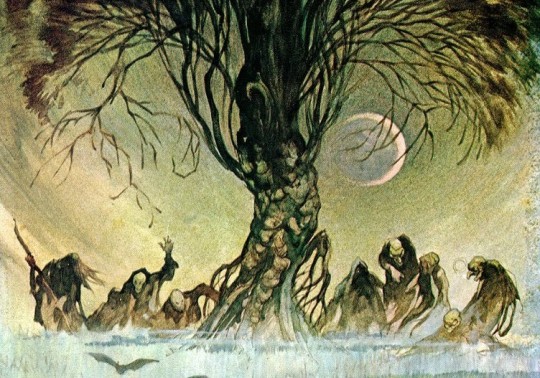
“Beware the autumn people. For some, autumn comes early, stays late, through life, where October follows September and November touches October and then instead of December and Christ’s birth there is no Bethlehem Star, no rejoicing, but September comes again and old October and so on down the years, with no winter, spring or revivifying summer. For these beings, fall is the only normal season, the only weather, there be no choice beyond.
Where do they come from? The dust. Where do they go? The grave. Does blood stir their veins? No, the night wind. What ticks in their head? The worm. What speaks through their mouth? The toad. What sees from their eye? The snake. What hears with their ear? The abyss between the stars.
They sift the human storm for souls, eat flesh of reason, fill tombs with sinners. They frenzy forth. In gusts they beetle-scurry, creep, thread, filter, motion, make all moons sullen, and surely cloud all clear-run waters. The spider-web hears them, trembles—breaks. Such are the autumn people. Beware of them.”
One thing I’ve learned: when people end whatever they’re saying with “idk, I’m probably not making any sense,” it usually means they are telling you something very close and personal to them, something that’s such an integral part of their being that they have trouble putting it into words that do it justice.
this hit me so incredibly hard, because it’s so very true
Before I begin, I encourage everyone to please read the disclaimer at the bottom of this post. Being a Tarot reader who does a significant amount of reading events at festivals, conventions, fairs, and private parties, I thought I would share some insight on things I wish I knew when I first started reading Tarot at events.
Before The Event
Because each event and situation is different, the preparation can vary but here are some things that I take into account before an event.
Legal: Some events require a business license, proof of tax id, a merchant’s license and or an entertainers license. Some do not.
Event and Vendor Contracts: It is important to always look over everything before signing. If there is something that is confusing or you need anything clarified, ask up to two reputable people to explain it just to be sure. If you are providing your own contract for a private event it is always good to include things like payment, cancellation policies, allotted space provided, if you need to provide your own furniture, force majeure, parking policy, etc. I always like to ask about alcohol being served to be able to prepare myself for people who may be under the influence. I ask about smoking and loud noise to help determine if those are conditions I’d be able to do readings under.
Is alcohol being served at this event?
Will smoking be permitted on the premises?
Will there be a smoking designated areas?
Will my table or space be located near the designated smoking area?
Will my table or space be located near speaker systems, live entertainment, etc?
Travel Expenses: Something that I didn’t take into account when I first started reading for events are travel, gas and lodging expenses. For private events, I like to include this expense in the contract. For public conventions and festivals, I like to keep this in mind in my event budget.
Getting Paid:
It is always good to know before committing to an event how you will be paid. Some of the more common practices that I have experienced are:
The event holder prepays a deposit (usually half the agreed upon rate) for X amount of hours or X amount of readings. The remaining rate is paid for once the event is completed.
Paid per reading. The event holder takes a percentage of the amount of money made for each reading and other misc services.
You keep all revenue made but prepay for your space or table fee beforehand.
Fees: For events like conventions and fairs, there are usually booth, space and table fees. You may also have to pay an event ticket fee. There are also usually premium spaces, premium corner spaces and multiple space rentals for higher rates that receive significantly more foot traffic. If you are reading at a private venue like a corporate event hall, bridal shower or private celebration, depending on the event holder, there aren’t usually table or space rental fees but sometimes there are so it is always best to ask beforehand.
Accepting Payment: Knowing how and what ways you are going to accept payment for your readings is important to track not only your earnings but makes it easy to pay for any fees accumulated as mentioned before. Cash is usually always ideal but having the ability to accept credit card and even electronic payments is a fabulous addition to your public reading arsenal. Some of the common services that I have used to be paid at events are SquareUp, Google Wallet, ApplePay, Paypal, Venmo, etc. One thing to keep in mind when accepting payments is to take account your local tax laws. Some of these mobile payment applications allow you to apply taxes before checkout. If you are only accepting cash, having a calculator handy would prove beneficial.
What To Bring With You
Deciding What To Bring: Because events vary significantly depending on venue, event holder and local laws it is important to make sure that you are aware of what you can and can’t bring. Referring back to your contract, you should be able to get an idea of what is allowed. Some venues provide a set of table and chairs, while others do not. Certain venues allow candles and incense, others do not. If your venue does allow candles and incense to be burned it is always good to be mindful of those with scent sensitivities.
Bringing A Helper: I always like to bring one friend to help me during events. Having a friend who can help you set up, watch your booth or table during your breaks or set up the list of names for the reading sign up sheet is an invaluable asset to have.
Decks And Tools To Bring: This is completely up to you and dependent on your preferences, reading style and the type of readings you are going to offer. I know of some readers who prefer to only use one deck. It is all up to you. Something that I have found to help me especially when reading outdoors is to keep small polished stones near me to place on top of cards so that they do not fly away before or in the middle of a reading.
Common Things To Bring With You: This is not an exhaustive list by far nor is it something you must follow exactly. These are just some things I like to bring with me that you might want to consider as well. It is important to factor in the cost of these things before an event.
Portable Canopy or Pop up tent (If it is permitted and you have the adequate space)
Table and Chairs (If not provided)
I like to bring a set of four chairs. Three for clients and one for myself.
Seat cushions and or back cushion.
Table cloth and weights to keep cloth down. I like to use crystals.
Rain cover for tent or canopy
Small first aid kit
Crystals or polished stones to act as small weights so cards don’t fly away if reading outdoors
Tip Jar
A few portable light sources if reading through the evening hours at an outside venue
Medicine that you need to take.
Scent free hand sanitizer.
Scent Free bug spray (If outdoors).
Sunscreen (If outdoors)
Tissues
Mints
Promotional signs for around event space.
Cooler of water bottles with ice packs
Cashbox
Portable fan
Phone battery backup
Mobile Tablet and battery backup (I utilize it as a portable point of sales device)
A copy of your code of ethics
A reading waiting list
Customizing Your Event Space: Because each event and Tarot reader is different, customizing your event space is entirely up you, as long as it abides by the venue or event holders rules. I’ve created luxurious spaces filled with twinkle lights and scarves and other times I’ve kept my space minimalistic and simple with just a table, a set of chairs and a few signs. It is all up to you to decide what look you are going for. There is no right or wrong way to set up your event space.
Some Easy Ways To Customize Your Space:
Tent banner and table banner with logo and website URL
Crystal/Salt Lamps (electric or candle holder based)
Candles (electric or wax based)
Scarves
Tapestries
Twinkle Lights
Flags
Wind Chimes
Bells
Fabric Pannels
Pillows
Baskets
Lanterns
Faux walls with art
Promotional And Marketing Tools: Events are a fabulous way to showcase your reading services, website and social media accounts to prospective clients. Some of the common ways that you could market yourself would be:
Business card holder and supplying business cards before or after readings.
Raffles for a paid reading or service
Promotional brochures about you and your readings.
Stickers with your logo
Table Tents
Buttons or pins
Flyers to your website or online shop.
Promotional post cards with coupon codes for new clients
E-mail list sign up form
Digital Light Box or Marquee Sign
Sale sheets
The Day Of The Event
Being Mindful Of Your Health: It is important to listen to your body. Do not overwork yourself. Stay hydrated and fed. I use up a lot of spoons (energy) during reading marathon sessions. I like to have a plan of action if I have depleted my energy reserves drastically before the event. Ensure that you take breaks, walk around for a bit, use the restroom and take any medicine that you may need. If you are working outdoors, periodically applying on sunscreen and bug spray is also beneficial. Another thing that I like to do is keep a misting fan with cold water to mist myself during, especially hot and humid events. For events during cooler months, I like to keep a large comfy sweater or jacket and a scarf in my possession. For those who subscribe to the belief in creating sacred spaces, grounding and centering, and shielding your energy, these things might be beneficial for you to do before you start reading at the event.
Be Mindful Of Mean-Spirited And Unsafe People: Sometimes you will encounter people who are skeptics or other readers who may want to show you their level of expertise and importance by making you feel less than. Remember that you are awesome and that you are worth all the hard work and dedication it took you to book this event. You are talented and do not deserve to be mistreated. Another thing to be mindful of is if your event is serving alcohol. If you are ever in a situation where someone can possibly be violent or harmful to you, themselves or others around them, knowing who to call or where the nearest authority is located is strongly beneficial before the event.
Reading Rates There are various ways to price your services for an event. If you aren’t being prepaid or have made prior payment arrangements by the event coordinator or a private company beforehand. Your rates are completely up to you. Some common ways to determine your reading rate are:
Setting a base reading rate depending on divination type. (Tarot Vs Pendulum)
Setting a base reading rate by tarot spread.
Setting a base reading rate by amount of cards pulled.
Setting a base reading rate by designated time breakdown.
Setting a base reading rate by the energy needed to perform the different type of reading. (Tarot Reading Vs Mediumship Session)
Before Reading For Others: I think it is important to keep an open mind when reading for others and to set safe boundaries for yourself. I also think its important for readings to be done in a respectful and comfortable way for both parties involved. Before I begin any reading I like to designate a few moments to either share a copy of my ethics of my prospective client or give them a short rundown of my ethics, ask for their preferred pronouns and provide my preferred pronouns to them as well. I also listen attentively to any questions or concerns the client may have before the reading. I also make an effort to ensure that my readings are accessible to everyone so I also ask if there is any way they would prefer the reading performed that is nonverbal. I do my very best to accommodate this.
Calming Nervousness: It can be intimidating reading for others in person. Something that I like to do is introduce myself casually to prospective clients walking by. I like to smile, start a little small talk and talk a little bit about the event and who I am. This gets the good vibes going for me and helps to ease my nervousness. Before reading I like to shuffle my cards a few times to “shuffle out” any of my nervousness.
After Reading For Others: After the allotted time for the reading has passed or you have wrapped up the reading in its entirety, it is important to thank the client and let them know that the reading session has now ended. Being kind and firm will allow you to be accountable of your timing and also keep your reading wait list from becoming too much to handle.
After The Event: Something that I like to do before packing up and leaving is thank the event coordinator and offer a complimentary reading if they have not received one already. I clean up my space and leave. For the next week after the event, I practice lots of self-care and do what I can to help replenish my energy levels. If you subscribe to the belief of cleansing and recharging your tarot decks and or energy this week would possibly be a good time do so. I also like to take the time to write down the things I believe I could improve for next time or the next events and the things I was proud of achieving.
The End: I know. I know. FINALLY. This post was SO LONG. After all is said and done, being a Tarot reader at an event can be a lucrative way to market yourself, meet new and like-minded people and make great income. It is lots of hard work and dedication but it is one of the most worthwhile experiences I’ve ever done as a Tarot reader. It is my greatest hope that this article has helped you in some way.




 Amethyst's Archive